
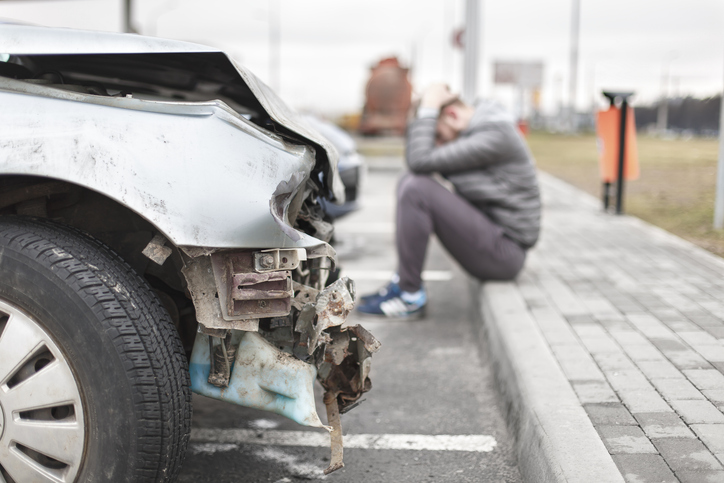

Most people think about car accidents in terms of twisted metal, broken bones, and insurance claims. But the psychological wreckage often lasts far longer than the physical injuries — and it’s something that both survivors and the legal system are only beginning to fully understand. The trauma of a collision doesn’t end when the ambulance leaves; in many cases, it’s just beginning.
The Brain on Impact: How Accidents Rewire Fear Responses
When a car accident occurs, the brain doesn’t simply record the event — it floods the system with stress hormones. According to research published by the National Institute of Mental Health, the amygdala — the brain’s fear center — becomes hyperactive during traumatic events, encoding the experience in vivid, intrusive detail. This is why accident survivors often report flashbacks triggered by seemingly innocuous stimuli: a honking horn, screeching tires, even the smell of gasoline.
The American Psychological Association notes that up to 39% of individuals involved in serious motor vehicle accidents develop symptoms of post-traumatic stress disorder (PTSD) within the first year. Unlike physical wounds that heal on a predictable timeline, psychological trauma can resurface months or even years later, disrupting relationships, careers, and daily functioning.
Survivor’s Guilt and the Weight of “What If”
One of the most underestimated psychological consequences of car accidents is survivor’s guilt — particularly when passengers or other drivers are seriously injured or killed. Even when an individual bears no legal fault, the emotional burden can be overwhelming. The mind becomes trapped in an endless loop of counterfactuals: What if I had taken a different route? What if I had left five minutes earlier?
Research from Harvard Medical School shows that survivor’s guilt activates the same neural pathways as grief and moral injury. Victims may withdraw from social activities, avoid driving altogether, or experience chronic anxiety that manifests as physical symptoms — muscle tension, insomnia, and digestive issues. Left untreated, these emotional wounds can calcify into long-term mental health conditions that rival the severity of any physical injury.
The Delayed Onset: Why Symptoms Appear Weeks After the Wreck
Many accident victims describe feeling surprisingly “fine” in the immediate aftermath — a psychological phenomenon known as shock-induced numbness. The body’s natural defense mechanisms temporarily suppress the full emotional impact, allowing individuals to handle logistics like police reports and hospital visits. But this calm is deceptive.
According to the Centers for Disease Control and Prevention (CDC), delayed-onset PTSD symptoms are common in trauma survivors, often emerging 30 to 90 days post-incident. By that time, the legal and medical systems may have moved on, leaving victims to grapple with anxiety, depression, and hypervigilance on their own. This delayed timeline complicates both recovery and legal claims, as psychological injuries are harder to document than broken bones visible on an X-ray.
The Legal Gap: When Psychological Injuries Meet Personal Injury Law
Courts have traditionally been more comfortable compensating visible injuries than invisible ones. But modern personal injury law is evolving to recognize the legitimacy of psychological harm. Attorneys increasingly rely on expert testimony from psychologists and psychiatrists to establish the causal link between the accident and conditions like PTSD, major depressive disorder, or generalized anxiety disorder.
Cornell Law School’s Legal Information Institute explains that psychological damages can include compensation for therapy costs, lost wages due to emotional inability to work, and diminished quality of life. However, proving these claims requires thorough documentation — medical records, therapy notes, and sometimes neuropsychological testing. For many victims, the burden of proof feels like a second trauma.
For those navigating the intersection of psychological and physical injury claims, working with a Pensacola car accident attorney team who understands the full scope of trauma — not just the physical damage — can make the difference between a settlement that covers medical bills and one that funds long-term mental health care.
Fear of Driving: When Avoidance Becomes Disability
One of the most debilitating psychological consequences of car accidents is driving phobia, clinically known as vehophobia or amaxophobia. The Anxiety and Depression Association of America reports that individuals with driving-related PTSD often avoid cars entirely, which can lead to job loss, social isolation, and dependence on others for basic transportation needs.
Cognitive-behavioral therapy (CBT) and exposure therapy have shown promise in treating driving phobia, but recovery is neither quick nor guaranteed. Some victims never regain their pre-accident confidence behind the wheel, fundamentally altering their independence and identity. This loss — though intangible — carries real economic and emotional costs that legal systems are only beginning to quantify.
The Ripple Effect: How Accidents Traumatize Entire Families
Psychological damage from car accidents doesn’t stay contained within the individual. Family members, particularly children who witness or survive accidents, can develop secondary trauma. The Journal of Traumatic Stress has documented cases where entire households experience increased conflict, emotional withdrawal, and collective anxiety after a serious collision.
Parents may become overprotective or avoidant, refusing to allow their children in cars or obsessively checking seat belts and mirrors. Spouses may struggle to provide emotional support while managing their own vicarious trauma. These relational fractures, though rarely discussed in courtrooms, represent a significant and often overlooked dimension of accident-related suffering.
Reframing Recovery: Why Psychological Healing Must Be Part of the Plan
The medical model of accident recovery often focuses narrowly on physical rehabilitation — physical therapy, surgery, pain management. But comprehensive recovery must address the mind as well as the body. The National Safety Council emphasizes that integrated care models — where mental health professionals work alongside orthopedic surgeons and neurologists — produce better long-term outcomes for accident survivors.
Unfortunately, insurance companies are notoriously reluctant to cover mental health treatment, dismissing it as “pre-existing” or “unrelated” to the accident. This is where legal advocacy becomes essential. Skilled attorneys can compel insurers to recognize that psychological injuries are not luxuries to be bargained away but legitimate consequences of traumatic events that demand proper compensation.
Holding the System Accountable for Invisible Wounds
Car accidents shatter more than windshields — they shatter the assumption of safety that most people carry unconsciously as they move through the world. The psychological aftermath is not a weakness or a failure of resilience; it’s a predictable response to an overwhelming event. Understanding the neuroscience and psychology behind these reactions doesn’t just inform better treatment — it builds a stronger case for justice.
As courts, insurers, and the public continue to grapple with the reality of trauma, one truth remains clear: healing from a car accident requires more than a settlement check. It requires acknowledgment, support, and the recognition that some scars, though invisible, run the deepest.






Leave a Comment